- Leander
- (view all locations)
Healthy smiles begin with prevention. Our preventive dental program focuses on helping children avoid dental problems before they start while supporting healthy growth, development, and lifelong oral health habits. You hope the day never comes when you have to think about them. That's why you may be reluctant to bring your child to the dentist until they're a little older. In reality, preventative dental care is the exact thing that's going to dramatically reduce your child's chances of having a major dental problem.
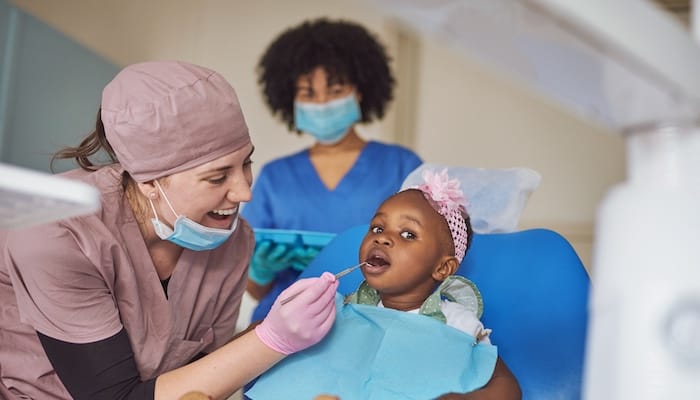
Routine visits ensure problems are corrected early, patients can access tips about healthy habits, and give them a chance to speak with a dentist about any concerns they may have about preventative dental care. That's why our dental practice wants you to know that we can provide a positive dental experience. Let us be your partner in routine preventative visits that give us a chance to work with you on monitoring growth and development for a healthy smile for life.
Everything is new to kids. Most kids are still learning about how to take care of their teeth all the way through elementary school. This makes them vulnerable to cavities and decay. In addition to preventing cavities on baby teeth, early exposure to a dentist office sets kids up to develop good oral hygiene habits they'll maintain for life. Our goals for preventive care at Austin Children's Dentistry in Leander include:
When you visit our office, your experience will be customized for your child's age and developmental stage. If necessary, we'll tweak treatments to address any existing issues or cavity risks that stand out to us. A standard visit includes things like a thorough oral exam and professional cleaning. In some situations, dental X-rays may be recommended. We also offer optional treatments like fluoride. Of course, our staff is also here to provide assistance with tips for brushing and flossing, nutritional recommendations, and answers about breathing or airway concerns.
A visit to the dentist really can feel like a walk in the park. Let our dedicated staff and capable, friendly dentists help your child enjoy a positive relationship with oral care. Book an appointment today.
Twice-annual visits spaced six months apart are ideal for most kids. We may recommend that you come in sooner if we're monitoring a cavity risk.
Yes, dental X-rays are considered safe for kids because they use significantly less radiation than traditional X-rays. Imaging plays an important role in diagnosing dental issues in kids before severe decay can set in.
Parents should book a first visit by age 1 or when their first tooth comes in. Don't panic if you've passed these milestones without booking a visit. Your dentist just wants to help you and your child catch up with a cleaning and oral exam at whatever stage you're at today.
Providing your child with a good foundation in oral hygiene habits and healthy teeth is paramount to their continued dental health. Dental sealants are among the best ways to protect both primary and permanent molars from decay and cavities. The chewing surfaces of molars contain natural pits and fissures that can trap plaque, food debris, and cavity-causing bacteria. These areas are often difficult for children to clean effectively, even with excellent brushing habits. A tooth sealant is a protective coating applied to the front and back surfaces of the teeth. It prevents decay and cavities from forming by keeping bacteria and food particles from contacting the tooth surfaces.
No matter the quality of your child's brushing and flossing habits, they may be unable to reach the deep chewing surfaces of their molars, so their teeth may not be cleaned properly. A sealant can dramatically reduce the risk of pit-and-fissure cavities by up to 80%, especially for:
When you come in for a sealant application, we'll first clean and isolate the teeth to be sealed. Next, we'll apply a conditioner that will prepare the tooth enamel. Then we'll apply the sealant and harden it with a curing light. The procedure is quick, non-invasive, comfortable, and effective. It's also completed without the need for anesthesia.
Dental sealants can last for several years, and we'll evaluate the condition of yours during your annual visit.
We sometimes apply a sealant to primary teeth; it's an individual evaluation. Typically, it's used on molars that are at increased risk for cavities or decay.
No, even with sealant you still need to practice good oral hygiene, including brushing, flossing, and routine preventive care.
Silver Diamine Fluoride (SDF) is a topical antimicrobial solution used to arrest active dental decay and reduce bacterial progression. As part of our preventive philosophy, SDF provides a minimally invasive treatment option that may help slow or stop cavity progression without drilling, injections, or anesthesia.
SDF is especially beneficial for:
One of the primary goals of preventive dentistry is to identify and manage disease as early as possible. In certain situations, SDF allows us to stabilize cavities and reduce disease progression while preserving healthy tooth structure.
Benefits of SDF may include:
The tooth is cleaned and isolated before SDF is carefully applied to the affected area. The procedure is quick, comfortable, and typically completed without drilling, injections, or anesthesia.
SDF may permanently darken areas of active decay after treatment. This color change is expected and often indicates that the cavity has been successfully arrested. Healthy tooth structure does not typically stain.
No. SDF does not restore lost tooth structure. Instead, it helps stop cavity progression and may delay or reduce the need for restorative treatment.
Yes. SDF has been extensively studied and is considered a safe and effective option for managing certain types of dental decay.
No. Brushing, flossing, fluoride exposure, healthy nutrition, and routine preventive visits remain essential for long-term oral health.